
Presenter
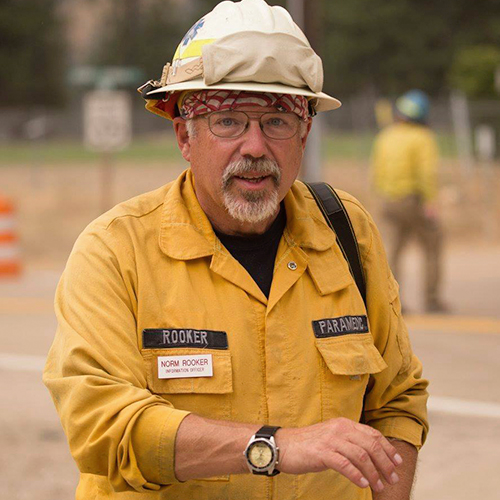
"Known as both the Code Warrior and the 911 Cowboy, Norm Rooker has been involved in EMS and rescue since 1973. His career has spanned a wide range of environments, from the City of St. Louis to the streets of San Francisco and the mountains of Colorado. His experience includes traditional EMS roles, supervision and administration, and specialized operations such as structural collapse rescue, SWAT/Tactical EMS, surf rescue, and technical rope rescue.
After retiring as Chief of Ouray County EMS, Norm has continued his service through contract and incident management work, including roles as a line paramedic and Medical Unit Leader for wildfires, as well as a line (boat) medic during part of the 2010 Gulf Oil Cleanup effort.
A popular speaker and writer, Norm has authored more than 100 articles for publications including JEMS, Emergency Medical Services, Advanced Rescue Technology, and Firehouse. He is a past member of the National Association for Search and Rescue Board of Directors, a founding member of the International Association of EMS Chiefs, and a founding member of NAEMT’s Disaster Response Committee."
“Becoming a medic for a special operations team involves much more than just taking care of the victim once they have been found or rescued. It requires an entirely different approach from the standard EMS response to an emergency, with a focus on supporting the overall mission and the safety of the team.
In this session, participants will learn how to assist the Incident Commander in ensuring mission success through effective medical planning and operational support. Topics will include caring for the entire team, including non-human members, performing a proper medical threat assessment, and addressing the numerous challenges that can impact team performance and safety.
From weather conditions and environmental hazards to operational threats and booby traps, this presentation will explore the unique considerations faced by special operations medics and provide insight into the skills needed to support successful outcomes in complex environments.”
“Earthquakes are not the only cause of building collapse. Structures can fail for a variety of reasons, creating complex and dangerous environments for rescuers and patients.
Join Norm, a former member of a FEMA USAR team, NVTF1, and a Rescue Systems 1 & 2 Instructor for the California State Fire Marshal’s Office, as he reviews the most common causes of structural collapse and what EMS providers should recognize and consider when responding to these incidents.
This session will provide an overview of collapse types, scene considerations, and the kinematics associated with injuries sustained during structural failures. Participants will explore how the type of collapse, the event itself, and even the time of day can influence injury patterns and patient presentation. The presentation will also discuss specific treatment considerations and strategies for providing effective care in these challenging environments.”